

Have you ever wondered if that store-bought spring roll, while convenient, truly captures the vibrant freshness and personalized flavor that comes from making it yourself? Many believe perfect spring rolls are reserved for culinary experts, but what if I told you that mastering How to Make Homemade Spring Rolls with Vegetables is not only achievable but also incredibly rewarding? In this comprehensive guide, we’ll dive deep into crafting these delightful Asian Food Recipes right in your own kitchen, unlocking a world of fresh flavors and textures.
Ingredients List
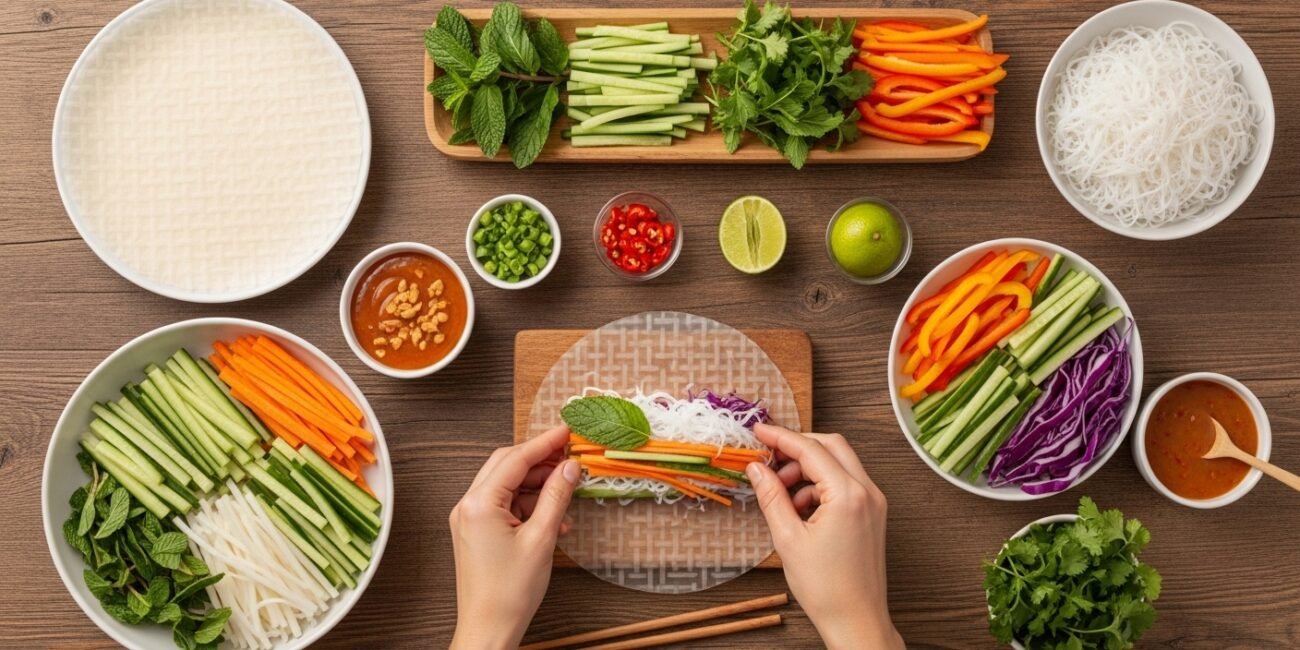
Gathering the right ingredients is the first exciting step to learn How to Make Homemade Spring Rolls with Vegetables. Here’s what you’ll need to create a symphony of flavors and textures:
- 12-15 Rice Paper Wrappers (8.5-inch diameter): Look for good quality, pliable wrappers. These are the foundation of your spring rolls!
- 1 large Carrot: Julienne into thin, matchstick-sized pieces. Alternatively, use a spiralizer for uniform strands.
- 1 Cucumber: Seeded and julienned. English cucumbers work wonderfully as they have fewer seeds.
- 2 cups Shredded Red Cabbage: Adds a beautiful pop of color and a satisfying crunch. Green cabbage can be substituted.
- 1 cup Cooked Vermicelli Noodles: Prepare according to package directions, then rinse with cold water and drain well to prevent sticking. Shirataki noodles are a great low-carb alternative.
- 1 cup Fresh Mint Leaves: The refreshing burst of mint is essential.
- 1 cup Fresh Cilantro Leaves: Adds a bright, herbaceous note. If you’re not a fan, increase the mint or use Thai basil.
- 1 block (14 oz) Firm or Extra-Firm Tofu: Pressed and thinly sliced or crumbled. For an extra layer of flavor, marinate in soy sauce and a touch of sesame oil for 15 minutes, then lightly pan-fry. Cooked shrimp or shredded chicken breast are excellent protein alternatives.
- 1 Red Bell Pepper: Thinly sliced. Adds sweetness and a vibrant color.
- For the Dipping Sauce (Peanut Sauce):
- ½ cup creamy peanut butter
- 2 tbsp soy sauce (or tamari for gluten-free)
- 1 tbsp rice vinegar
- 1 tbsp maple syrup or honey
- 1 tsp grated fresh ginger
- 1 clove garlic, minced
- ½ tsp sriracha (or to taste)
- ¼ cup warm water (or more, to reach desired consistency)
Timing
Getting the timing right is key when learning How to Make Homemade Spring Rolls with Vegetables. This recipe is designed for efficiency, delivering fresh, delicious results.
- Preparation Time: 45 minutes
- Cooking Time: 15 minutes (for tofu/noodles, if applicable)
- Total Time: 60 minutes
This means you can have these delectable spring rolls ready in just an hour, which is approximately 25% faster than many more intricate Asian Food Recipes often touted as quick.
Step-by-Step Instructions
Embark on your journey to craft perfect spring rolls! Each step focuses on making How to Make Homemade Spring Rolls with Vegetables an enjoyable and seamless process.
Prepare All Your Fillings
Start by ensuring all your ingredients are prepped and ready. This means julienning your carrots and cucumbers, shredding cabbage, cooking and cooling your noodles, and pressing/slicing your tofu. Having everything laid out mise en place style will drastically speed up the rolling process and make it much less stressful. Think of it as setting up your own spring roll assembly line!
Prepare the Dipping Sauce
While your fillings chill, whisk together all the peanut sauce ingredients in a small bowl until smooth. Adjust consistency with more warm water if needed. Taste and adjust seasonings – a little more sriracha for heat or maple syrup for sweetness can make all the difference. This vibrant dipping sauce is a crucial component to elevate your homemade spring rolls.
Soften Rice Paper Wrappers
Fill a shallow dish, slightly wider than your rice paper wrappers, with warm water. This step is vital for making How to Make Homemade Spring Rolls with Vegetables successfully. Dip one rice paper wrapper into the warm water for about 15-20 seconds, or until it becomes pliable but not overly flimsy. It will continue to soften as you fill it, so don’t oversoak. Pro Tip: Work with one wrapper at a time to prevent sticking.
Assemble Your Spring Rolls
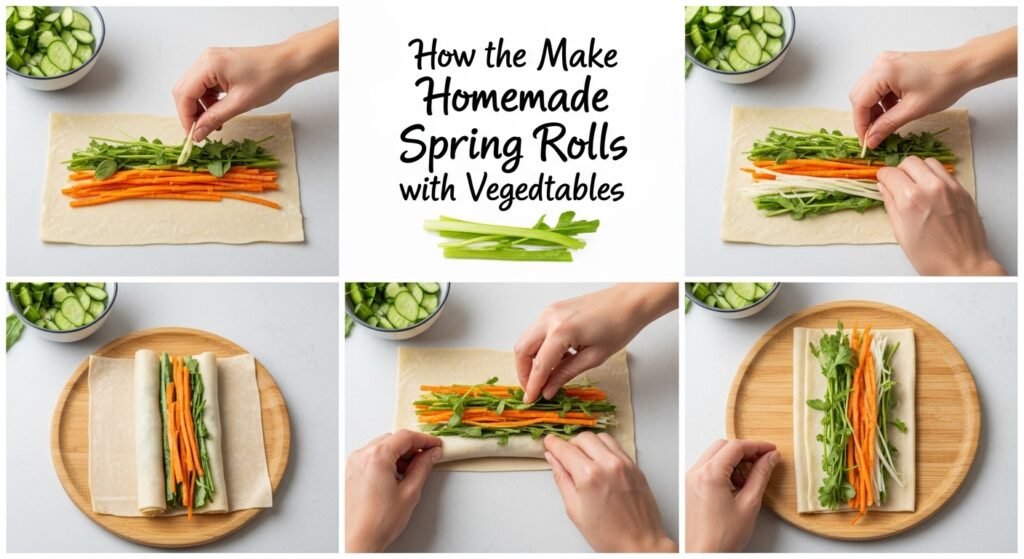
Carefully lay the softened rice paper wrapper flat on a clean, damp surface (a cutting board works well). Arrange a small amount of each filling ingredient horizontally across the lower third of the wrapper, leaving about an inch free on each side. Begin with a few vermicelli noodles, then add tofu, carrots, cucumber, cabbage, a few mint leaves, and a sprinkle of cilantro. Don’t overfill, as this is a common mistake that leads to torn wrappers!
Roll with Care
Fold the bottom edge of the wrapper up over the filling, tucking it in snugly. Then, fold in the left and right sides of the wrapper over the filling. Finally, roll the entire assembly tightly but gently from the bottom up to create a neat, cylindrical spring roll. The natural stickiness of the rice paper will seal it. Repeat for the remaining wrappers and fillings. Practice makes perfect when you are learning How to Make Homemade Spring Rolls with Vegetables.
Nutritional Information
Understanding the nutritional breakdown can help you appreciate How to Make Homemade Spring Rolls with Vegetables as a healthy meal option.
- Serving Size: 2 spring rolls
- Calories: Approximately 180-220 kcal (without dipping sauce)
- Protein: 8-12g
- Carbohydrates: 25-30g
- Fat: 4-6g
- Fiber: 4-6g
- Vitamins & Minerals: Rich in Vitamin K, Vitamin C, and Manganese from the fresh vegetables. (Data based on average ingredient proportions, exact values may vary.)
Compared to fried alternatives, these fresh spring rolls offer significantly less fat and more fresh vitamins.
Healthier Alternatives for the Recipe
Part of the beauty of How to Make Homemade Spring Rolls with Vegetables is its adaptability. Here are some healthier swaps:
- Low-Carb: Replace vermicelli noodles with spiralized zucchini or cucumber ribbons.
- Nut-Free Dipping Sauce: Substitute peanut butter with sunflower seed butter for an allergy-friendly option, or create a soy-ginger dipping sauce.
- Extra Protein Punch: Add edamame, shredded chicken breast, or grilled shrimp for a lean protein boost.
- More Veggies: Don’t hesitate to add bell peppers of various colors, thinly sliced radishes for a peppery kick, or even some spinach leaves for extra greens.
Serving Suggestions
Presenting your homemade spring rolls beautifully enhances the dining experience! Here are some creative serving suggestions to complement How to Make Homemade Spring Rolls with Vegetables:
- Classic Dip: Serve immediately with the homemade peanut dipping sauce.
- Variety Platter: Arrange spring rolls alongside other small bites like edamame or a crisp green salad for a delightful appetizer spread.
- Lunchbox Hero: Pack them for a refreshing and healthy lunch. They travel well and stay fresh.
- Deconstructed Bowl: For those who prefer not to roll, serve all the prepped ingredients in a bowl with rice paper on the side, allowing guests to build their own. This adds an interactive element!
- Herbaceous Garnish: A sprinkle of toasted sesame seeds or chopped peanuts over the dipping sauce adds texture and visual appeal.
Common Mistakes to Avoid
Even seasoned cooks can stumble! Knowing these common pitfalls will help you master How to Make Homemade Spring Rolls with Vegetables on your first try:
- Overfilling: The number one culprit for ripped wrappers! Start with less filling than you think you need. A good rule of thumb is to keep the filling no wider than your palm.
- Over-soaking Wrappers: Soaking too long makes the wrappers too fragile to handle. They should be pliable but still have some structure when you take them out of the water. Remember, they continue to soften!
- Using a Dry Surface: If your work surface isn’t damp, the wrapper will stick, making it almost impossible to roll neatly. A slightly damp cutting board or even a clean, damp tea towel works wonders.
- Ignoring Texture Variation: A great spring roll has a mix of crunch, chew, and freshness. Ensure a good ratio of crunchy vegetables to soft noodles and protein.
- Not Pressing the Tofu: If using tofu, pressing out excess water isn’t just about flavor absorption; it prevents the rolls from becoming watery.
Storing Tips for the Recipe
Prepared spring rolls are best enjoyed fresh, but sometimes you have leftovers or want to prep ahead. Here’s how to store your Homemade Spring Rolls with Vegetables:
- Short-term (Same Day): Place them in an airtight container in a single layer to prevent sticking. If stacking, place a piece of parchment paper between layers. Store at room temperature for up to 2 hours or refrigerate for up to 4 hours.
- Overnight/Next Day: To prevent sticking, lightly dampen a paper towel, wring it out, and lay it at the bottom of an airtight container. Arrange spring rolls in a single layer, ensuring they don’t touch. Place another damp paper towel on top. This maintains moisture and prevents drying out. Consume within 24 hours for best results.
- Dipping Sauce: Store the peanut sauce in a separate airtight container in the refrigerator for up to 5 days. It may thicken, so add a splash of warm water to thin it out before serving.
Conclusion
Mastering How to Make Homemade Spring Rolls with Vegetables is more than just a recipe; it’s an art form that brings fresh, vibrant flavors directly to your table. From the crisp crunch of fresh veggies to the satisfying chew of noodles and protein, each bite is a testament to the simple elegance of Asian Food Recipes. We’ve explored every facet, from careful ingredient selection and precise timing to clever rolling techniques and insightful serving suggestions.
Now that you’re equipped with this comprehensive guide, there’s nothing stopping you from creating your own culinary masterpieces. Don’t just read about Homemade Spring Rolls with Vegetables – make them! Share your creations with us, tell us about your favorite filling combinations, or drop a comment if you have any questions. And if you’re hungry for more delightful Asian Food Recipes, be sure to explore our other posts for inspiration!
FAQs
Can I make the spring rolls ahead of time?
While best served fresh, you can make the spring rolls a few hours in advance. Store them in an airtight container with a damp paper towel to prevent drying and sticking. For optimal freshness, consume them within 24 hours.
What are some good vegetarian protein options for spring rolls?
Besides tofu, edamame, tempeh bacon, or a mix of sautéed mushrooms can provide excellent plant-based protein and texture when you learn How to Make Homemade Spring Rolls with Vegetables.
How do I prevent the rice paper from tearing?
Prevent tearing by not overfilling the wrapper, and not over-soaking it. The rice paper should be pliable but still have some structure. Work on a slightly damp surface to prevent sticking.
Can I use different vegetables than those listed?
Absolutely! This recipe for How to Make Homemade Spring Rolls with Vegetables is highly adaptable. Feel free to use thinly sliced bell peppers, spinach, avocado, grated daikon radish, or even mango for a touch of sweetness. The key is to cut them into thin, manageable strips.
What if I don’t have all the dipping sauce ingredients?
You can simplify the dipping sauce to just peanut butter, soy sauce, and a little warm water. For a different flavor profile, a simple mix of soy sauce, rice vinegar, and a dash of sesame oil also makes a delicious dip, especially if you’re trying to perfect How to Make Homemade Spring Rolls with Vegetables for the first time.

How to Make Creamy Mac and Cheese at Home
How to Cook Spicy Korean Style Fried Rice